

• For the majority of these global south countries, there is a history of unambiguously signing up for things they don’t understand and then having to manage the fallout
• It’s not enough to have these multinational corporations budget in their Corporate Social Responsibility piggy-bank and spending for climate or SDG finance but rather begin paying back their tax obligations
• The only loss and damage to debt-distressed nations or least developed countries are the loss of tax revenue and the damage caused by the perpetuation of financial inequalities
In a noteworthy development this year, Gabon successfully implemented a Debt-for-Nature or Climate Swap valued at $500 million, aimed at the preservation of its coastal waters. For those unfamiliar with the concept, a debt-for-nature or climate swap involves a country grappling with debt leveraging the face value of its outstanding debt in exchange for investments in environmental conservation initiatives.
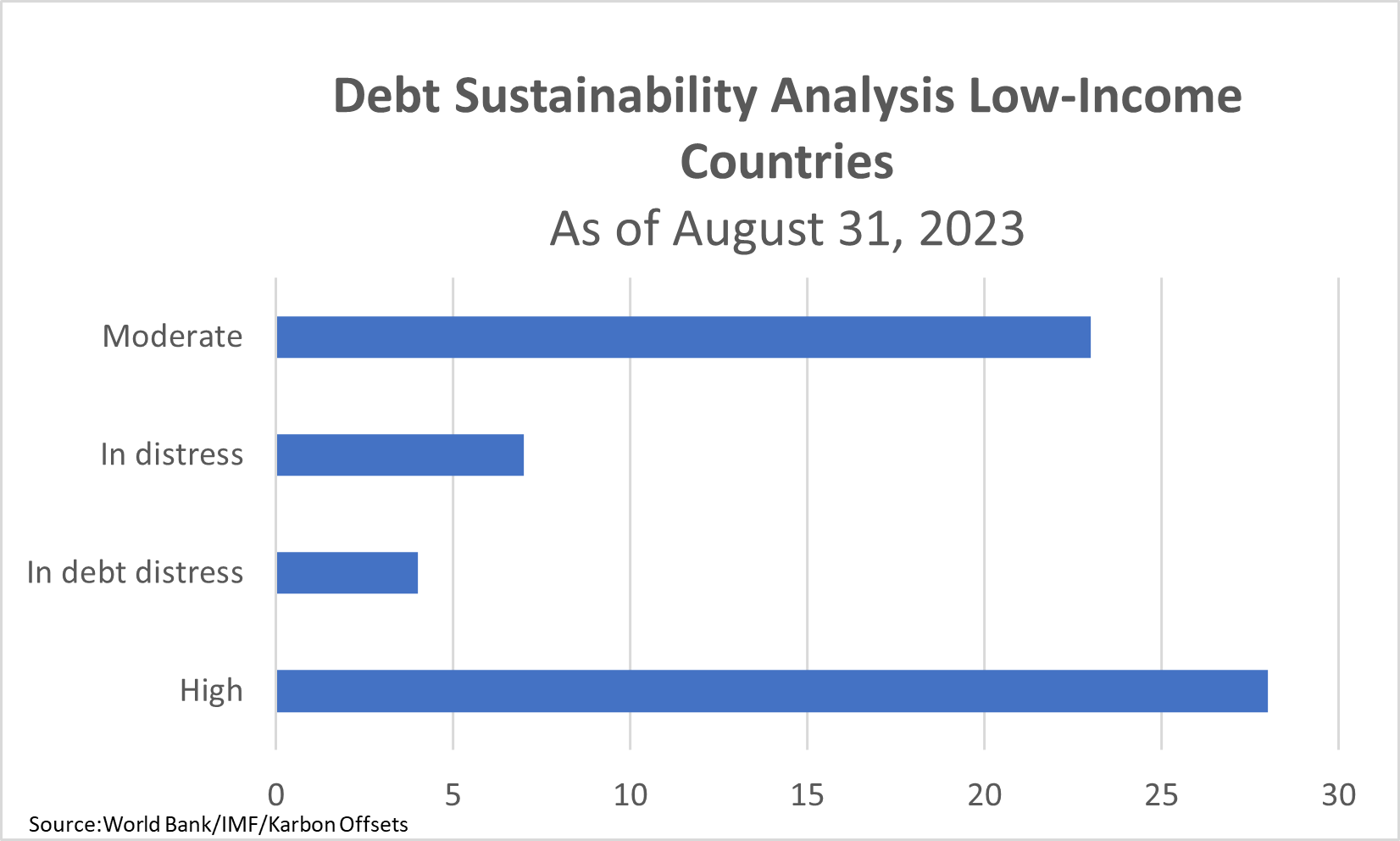
As of September 2023, the International Monetary Fund (IMF) and World Bank has identified eleven countries as being in a state of ‘debt distress or in distress,’ with an additional twenty-eight nations classified as being at ‘high’ risk of experiencing such distress. While the debt-for-nature or climate swap emerges as a potential remedy for countries facing economic challenges, it is imperative to acknowledge that certain nations may possess the capacity to service their debt independently.
Here’s the thing. Currently, several nations, including the Democratic Republic of the Congo, Malawi, and the Lao People’s Democratic Republic, are actively advocating for a commitment from developed countries to establish a Loss and Damage fund. This fund is projected to reach a substantial sum, ranging between $150 to $300 billion by 2030, with the aim of financing the aftermath of natural catastrophes and facilitating the redevelopment efforts in affected regions.
It is crucial to note that only 46 countries would be eligible to benefit from this fund once the agreement is finalized. As of November 4, 2023, during the ‘Transitional Committee Five,’ the World Bank has assumed the role of an interim trustee, taking charge of hosting and disbursing the funds on behalf of the qualifying nations and their committee members.
Least Developed Countries (LDCs)
(46 countries)
Africa 33, Asia 9, Caribbean 1, Pacific 3

Source: UNCTAD |Note: The map’s boundaries and names do not imply UN endorsement. Date: October 2023
This initiative’s efficacy in the immediate future is potentially compromised by its lack of global binding authority. Consequently, the financial contributions extracted from major polluters are projected to constitute only a nominal portion of the requisite trillion-dollar fund necessary to address worldwide losses and damages.
In the realm of global economic challenges, certain nations grappling with debt distress or least developed countries find themselves contending with less intricate taxation systems.
For the majority of these global south countries, there is a history of unambiguously signing up for things they don’t understand and then having to manage the fallout; of understanding they shouldn’t have signed unto an agreement with certain corporation’s. Which is as a result of corporations at times exploiting the naivety of these nations, in simple terms, where developing countries administration or decision makers are perceived as meek.
When examining the average tax-to-Gross Domestic Product (GDP) ratio among Organisation for Economic Co-operation and Development (OECD) member nations, it becomes evident that these economically vulnerable countries consistently confront the repercussions of revenue loss attributable to arm’s length companies operating within non-cooperative tax jurisdictions.
In the UNDP’s 2023 “Dialogue on Tax and SDGs,” taxation was noted as being at the forefront of achieving the Sustainable Development Goals (SDGs). “Tax systems are capable of so much more than mere revenue generation – they can be instrumental in driving sustainable development, fortifying social contracts, and directly influencing key SDGs related to health, climate, and good governance,” the week long dialogue echoed.
According to the Global Alliance for Tax Justice, countries lose $480 billion annually to global tax abuse, resulting in trillions of US dollars shifted globally to defeat national tax efforts, with amounts of money held in offshore tax havens (excluding non-financial wealth) reportedly in the amount of $9.5 trillion in 2004 to about $32 trillion by 2010.
On October 11, 2023, Nigeria proposed a draft resolution calling for a UN Convention on Tax. This move comes as OECD countries face criticism for insufficient efforts in curbing tax abuse by multinational corporations while seeking to have developing countries adapt to a mere Global Minimum Tax (GMT) of 15% or Pillar Two global minimum tax. Nigeria’s proposal underscores the need for international cooperation to address the economic impact of tax evasion and establish a fair global economic framework.
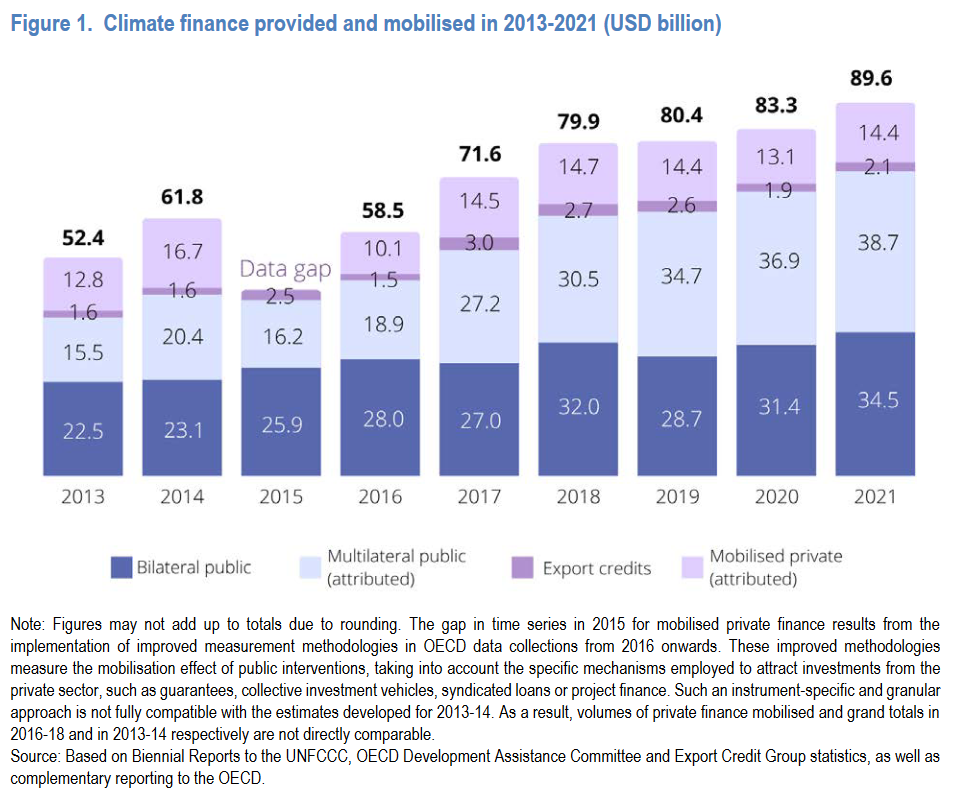
In the most recent publication unveiled this week by the Organisation for Economic Co-operation and Development (OECD) titled ‘Climate Finance Provided and Mobilised by Developed Countries in 2013-2021,’ the documented figures reveal a notable increase in climate finance. Specifically, the report highlights that the total amount raised in 2021 reached $89.6 billion, representing a discernible uptick from the previous year’s figure of $83.3 billion in 2020.
On November 10, 2023, the Tax Justice Network reported that multinational corporations, disclosing their use of tax havens, underpaid a total of $868 billion in corporate taxes. This information, submitted to governments, remains undisclosed to the public, protected by a global OECD rule allowing governments to keep it confidential.
A Solution!
In addressing the imperative of protecting least developed countries and debt-distressed nations from the adverse effects of tax abuse and financial inequalities perpetuated by the diversion of funds to tax havens, several concrete measures can be implemented to safeguard the integrity of public services and foster national social and economic development and climate resilient investments.
- Set cap on deductibles
- Cancel Tax Treaties
- Registry of lobbyist
- Advance pricing agreements
- Registry for ultimate beneficial owners of companies and end the use of Blind Trusts
- Advocating for Offshore Banking Units (OBUs) to pay their fair share
Set cap on deductibles
Government officials from debt-distressed nations or least developed countries are advised to engage in negotiations with multinational corporations to establish caps on deductibles related to royalties, patents, copyrights, interest rates, and management fees. This strategic measure is aimed at averting the risk of excessive deductions that may be exploited to diminish tax liability and, in certain instances, facilitate tax avoidance. By convening at the negotiation table, officials can proactively address potential loopholes and foster a fair and transparent financial environment.
Cancel Tax Treaties
In various instances, developing countries find themselves without significant advantages from tax treaties; instead, it is the developed nations and their multinational corporations that tend to reap the benefits. Example: Barbados aims to redefine how affluent nations support their developing counterparts during climate emergencies through the Bridgetown Initiative. Despite having a Tax Treaty with Canada, a legal dispute involving Loblaw Financial Holdings Inc. and Her Majesty The Queen reveals no discernible advantages for the people of Barbados. Witnessing Prime Minister Mia Mottley of Barbados traverse the globe, especially in the context of numerous Canadian multinationals utilizing numerous laws of the tax treaty, whereas the PM could raise the possibility of leveraging the countless of Canadian companies using Barbados to avoid paying tax to alleviate the country’s debt burden and address the challenges posed by climate change.
Registry of lobbyist
Creating a register of lobbyists in the country for transparency and accountability is crucial to prevent undue influence. Many debt-distressed nations or least developed countries lack lobbying registries, enabling multinationals to influence through gifts, sponsored travels, and political donations. Additionally, building a registry alongside EITI standards will help eliminate corruption practices. Note: Section 1504 of the Dodd-Frank Act.
Advance pricing agreements
Establish a recommended profit percentage for tax payments and develop a framework for resolving disputes and determining the appropriate allocation of profits across different jurisdictions. This will encourage taxpayers to comply with transfer pricing regulations.
Registry for ultimate beneficial owners (UBO) of companies and end the use of Blind Trusts
A public registry where anyone worldwide can search for the Ultimate Beneficial Owner (UBO) of a company without any fees. By preventing ownership from being concealed, this transparency reduces the likelihood of illegal financial activities and effectively combats money laundering and tax evasion. Additionally, the prohibition of concealing financial interests and holdings extends to blind trusts, which manage assets without the beneficiary’s knowledge.
Advocating for Offshore Banking Units (OBUs) to pay their fair share
Lastly, and most importantly, it may be possible to deter people from using tax havens solely to reduce their tax obligations if OBUs are required to pay their fair share. This measure could contribute to the creation of a more accountable and transparent global financial system.
Conclusion
Moving wealth out of national taxation has cost countries trillions of dollars in revenue loss, which could have otherwise been used to finance sustainable development projects in developed and developing countries across the globe. However, for now, debt-for-nature swaps and Carbon Credit selling approach provide a better way to finance carbon reduction projects, reduce potential losses and damages, and Biochar Carbon Removal Credit Revenue can also be used to compensate affected communities for losses and damages stemming from climate change.
As noted earlier, the only loss and damage to debt-distressed nations or least developed countries are the loss of tax revenue and the damage caused by the perpetuation of financial inequalities. Funds meant for vital public services are diverted to tax havens or non-cooperative tax jurisdictions. There are two threats to the global community: the growing debt burden and climate change. To rectify the debt burden, multinational corporations must genuinely commit to paying their fair share to debt-distressed nations or least developed countries and not the citizens of developed countries subsidizing least developed countries.
The sustainability report of many of these tax-avoiding companies should begin with: We paid back taxes owed to ‘blank developing nation’ to support sustainable development goals and climate finance of ‘blank developing country’ rather than fruitless pledges made with taxpayer subsidies.
Climate activists and environmentalists must consider voicing the multitude of crises that could be mitigated through the allocation of the substantial lost tax revenue, such as the enhancement of public services, facilitation of a equitable energy transition, carbon removal projects, among others.
It’s not enough to have these multinational corporations budget in their Corporate Social Responsibility piggy-bank and spending for climate or SDG finance but rather begin paying back their tax obligations.
Let’s make good on the planet!
By: Kleber Ofume