

The February 2024 update on the international carbon market unveils significant insights that shape our understanding of current global efforts in combating climate change:
1. Carbon Pricing Mechanisms: A noteworthy stride was made with the activation of 73 national and subnational carbon pricing mechanisms.
2. Global Coverage: These mechanisms collectively addressed a substantial 23% of global greenhouse gas (GHG) emissions, reflecting a concerted effort on a global scale.3. Funds Raised: Impressively, a substantial sum of $100 billion was successfully generated through carbon pricing mechanisms in the year 2022. This financial backing demonstrates a tangible commitment to advancing climate initiatives.
4. Voluntary Carbon Market: In 2022, the voluntary carbon market reached a commendable value of $1.87 billion, indicating a growing recognition of the importance of voluntary contributions in the fight against climate change.
5. Bilateral Agreements: Nations took a collaborative approach, signing a total of 78 bilateral agreements under Article 6.2, highlighting the shared commitment to addressing climate challenges.
6. COP28 Update: Regrettably, at COP28, no consensus was reached on decision texts pertaining to Article 6 market mechanisms. This underlines the complexities and challenges faced in aligning international perspectives on crucial climate-related matters.
In emphasizing the broader context, it is pivotal to recognize the significance of Article 6 of the Paris Agreement. This article outlines the framework for countries to collaboratively work towards achieving climate targets. Its implementation facilitates international cooperation in the battle against climate change and provides financial support for developing nations.
As we look ahead to COP30 in 2025, a crucial milestone looms. Countries are anticipated to submit their next Nationally Determined Contributions (NDCs) with 2035 targets. The expectation is for these targets to showcase a substantial progression compared to previous commitments.
The willingness of governments to elevate their climate ambitions, particularly towards the challenging 1.5°C goal of the Paris Agreement, will inevitably hinge on the full and effective implementation of Article 6 market mechanisms. This implementation must be guided by robust rules ensuring the environmental and social integrity of carbon projects, emphasizing a holistic approach to sustainable climate action.
In 2023, the global market for carbon dioxide (CO2) permits witnessed a remarkable surge, reaching an unprecedented 881 billion euros ($948.75 billion), as reported by analysts at LSEG on Monday. This marked a 2% increase from the previous year, underscoring the growing significance of emissions trading systems (ETS) globally.
Numerous countries and regions have embraced emissions trading systems to establish a monetary value for carbon dioxide emissions, creating incentives for companies to invest in low-carbon technologies and contribute to climate targets. The LSEG Carbon Market Year in Review 2023 disclosed that approximately 12.5 billion metric tons of carbon permits changed hands in the world’s emissions markets, a figure comparable to 2022.
However, record prices in key markets like Europe and North America propelled the overall market value. The European Union’s ETS emerged as the world’s most valuable carbon market, totalling around 770 billion euros in 2023, representing a 2% increase from the previous year and constituting 87% of the global total.
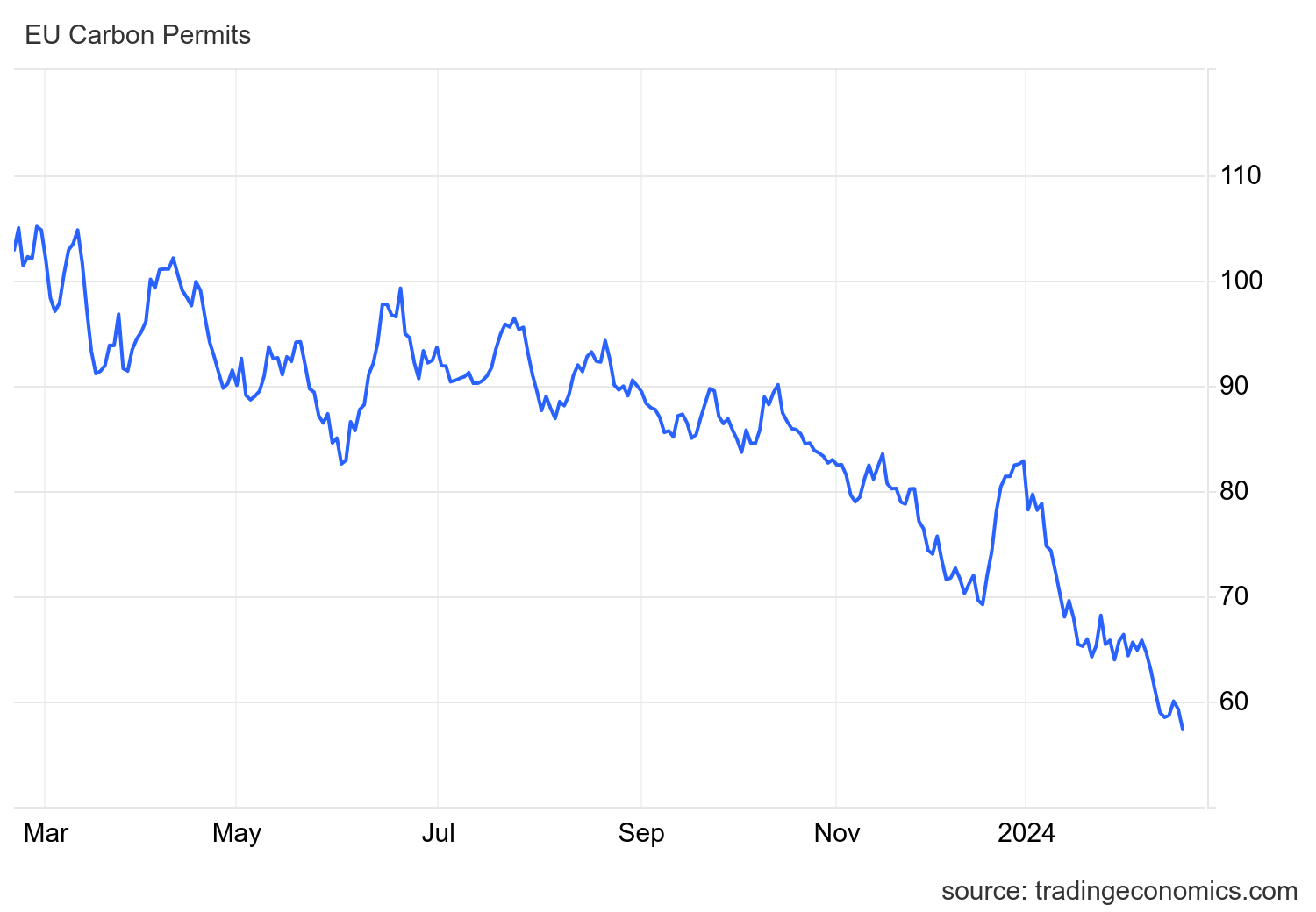
Despite the EU ETS experiencing record-high carbon permit prices exceeding 100 euros in February of the previous year, a subsequent decline occurred toward the end of 2023. This trend persisted into 2024, with the benchmark contract falling below 60 euros/ton.
Meanwhile, China’s national ETS recorded its own historic high in 2023, reaching 80.51 yuan ($11.19) in October, with the market’s total value estimated at 2.3 billion euros.
This comprehensive overview highlights the dynamic trends and significant developments within the global carbon permit markets, emphasizing the critical role played by emissions trading systems in shaping environmental policies and market dynamics.
By: Kleber Ofume